
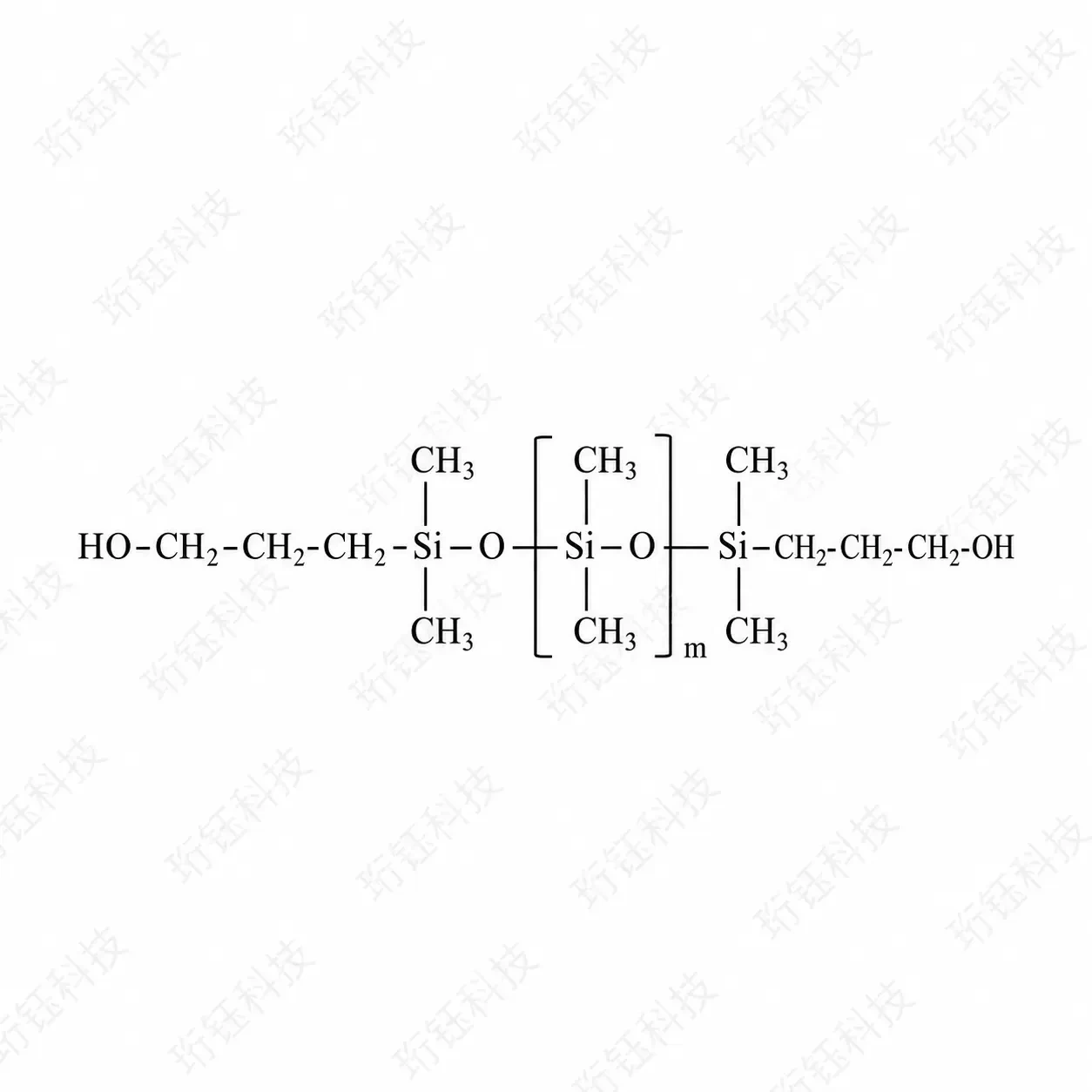
ZG-DX22 Double-End Hydroxyl-Functional Polydimethylsiloxane
ZG-DX22 contains organic primary alcohol hydroxyl groups at both ends of the molecular chain, which can react with isocyanates and, under suitable esterification/polycondensation conditions, can also participate in reactions with polyester and other resins. The double-end telechelic structure makes PDMS segments better suited to enter the polymer backbone or network structure as linear flexible soft segments. By properly controlling hydroxyl equivalent and addition ratio, it can improve low-temperature flexibility, resilience, curing shrinkage and internal stress, while imparting a certain degree of hydrophobicity, slip, moisture resistance and surface-control performance to the system.
Product positioning: double-end dihydroxyl reactive silicone macromolecular flexible soft segment for backbone incorporation, chain extension and flexible network construction in PU/PUD/TPU, polyester, polyurethane adhesives/sealants and elastomeric systems
Product Features
Reactive Flexible Segment
PDMS segments are chemically incorporated into the resin system via hydroxyl reaction, helping reduce the migration, exudation and insufficient durability risks of ordinary silicone oils
Flexibility and Stress Relief
Improves softness, resilience, slip, hydrophobicity, anti-blocking, stain resistance and friction performance, and helps relieve internal stress in the system
High Reaction Efficiency
Low-molecular-weight grades have higher hydroxyl density and more pronounced reaction efficiency, suitable for systems requiring high reaction participation
Pronounced Surface Effect
High-molecular-weight grades show a more pronounced PDMS surface effect, but require reinforced compatibility evaluation
Typical Technical Specifications
| Model | Nominal Mn (g/mol) | Viscosity (25°C, mPa·s) | Hydroxyl Equivalent (g/eq) | Hydroxyl Content (mmol/g) | Hydroxyl Value (mg KOH/g) |
|---|---|---|---|---|---|
| ZG-DX22-1200 | 1200 | 20-30 | 600 | 1.667 | 93.50 |
| ZG-DX22-1600 | 1600 | 25-35 | 820 | 1.220 | 68.41 |
| ZG-DX22-2000 | 2000 | 30-40 | 975 | 1.026 | 57.54 |
| ZG-DX22-2500 | 2500 | 35-50 | 1278 | 0.782 | 43.90 |
| ZG-DX22-3000 | 3000 | 40-60 | 1515 | 0.660 | 37.03 |
| ZG-DX22-3500 | 3500 | 50-70 | 1742 | 0.574 | 32.20 |
| ZG-DX22-4500 | 4500 | 70-80 | 2276 | 0.439 | 24.65 |
Note: Nominal Mn is a grade reference. Technical specifications are typical values; the actual batch is subject to the COA.
Applications and Recommended Dosage
| Application System | Recommended Dosage | Recommended Usage |
|---|---|---|
| PU/PUD/TPU | 1.0%-10.0% | 1.0%-10.0% of the resin or polyol component |
| PU Elastomers, Polyurethane Adhesives/Sealants | 3.0%-15.0% | 3.0%-15.0% of resin solids |
| Polyester/Silicone-Modified Resins | 1.0%-8.0% | 1.0%-8.0% of resin solids |
| Polyurethane Electronic Potting/Flexible Protective Coatings | 1.0%-10.0% | 1.0%-10.0% of resin solids |
Compatibility Reference
| Resin System | Compatibility | Notes |
|---|---|---|
| Polyurethane (PU/PUD/TPU) | Excellent | Double-end hydroxyls react with isocyanate for backbone incorporation |
| Polyester Resin | Good | Can participate in esterification/polycondensation under suitable conditions |
| Acrylate Resin | Moderate | Compatibility needs evaluation; pre-trials recommended |
| Epoxy Resin | Moderate | Compatibility needs evaluation; pre-trials recommended |
| Waterborne Systems | Good | Low-molecular-weight grades offer better compatibility |
Note: Compatibility is a general reference. Actual results are affected by the resin system, solvent, process conditions and other factors; pre-trials are recommended for confirmation.
Packaging, Storage and Safety
Packaging:25 kg, 50 kg, 200 kg plastic drums
Storage:Keep containers sealed and store in a cool, dry, ventilated place at 5-35°C, away from moisture and direct sunlight
Shelf Life:Recommended shelf life of 12 months in unopened conditions